A Stronger Connection for Ontario’s Machine Shops
A machine shop can be busy all day and still feel disconnected from the industry around it.
Between quoting jobs, managing production, maintaining equipment and finding skilled people, there is little time left to discover what other shops are doing. Yet just down the road, another owner may have solved the same problem, found a useful training partner or invested in technology that someone else is considering.
Ontario has considerable machining expertise. The challenge is making that expertise easier to find and share.
That is the thinking behind the Ontario Machining Alliance and its work alongside the Ontario Machining Network website. Through in-person gatherings and an online platform, the goal is to build a community where relationships help businesses become stronger.
For founders Darryl Gratrix and Tim Gingerich, the starting point was simple: bring people together and give them something worthwhile to talk about.
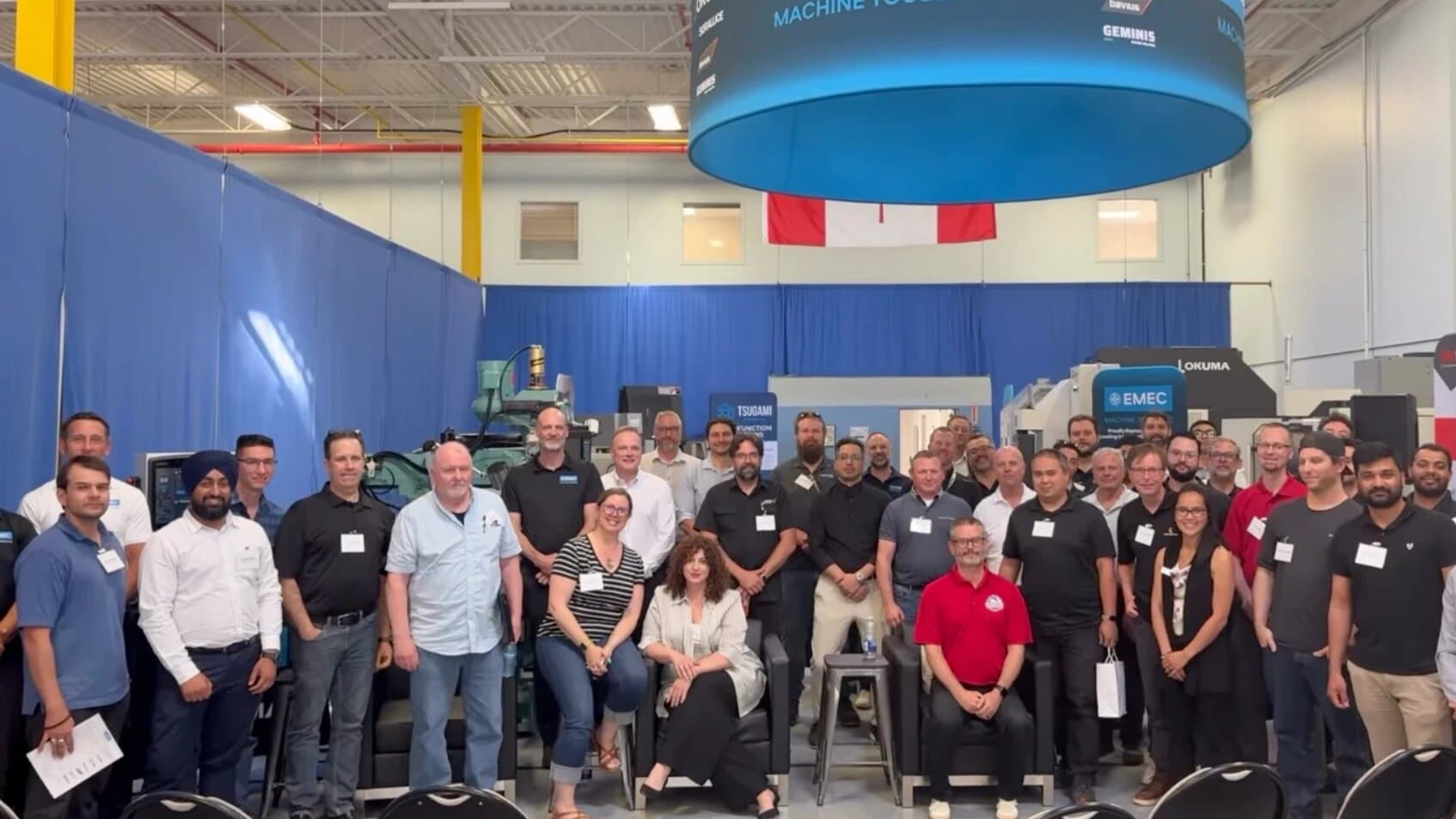
The first gathering attracted 18 people. Later events brought together roughly 60 to 70 participants, suggesting an appetite for conversations that extend beyond the next purchase order. Shop owners, machinists, suppliers, educators and industry leaders were making time to meet, exchange ideas and hear different perspectives.
The format is deliberately informal. Panel discussions provide a focus, but the evening leaves room for the conversations that happen around them. Someone asks how another shop trains apprentices. An owner shares a retention challenge. An educator hears directly from employers about the skills they need.
Those exchanges matter because the pressures facing Ontario’s machining businesses rarely exist in isolation. Training affects productivity. Culture affects retention. Retention affects capacity. Capacity affects whether a shop can confidently take on its next customer.
A conversation with someone who understands those connections can be valuable long after the event ends.
The ambition is to make that kind of exchange a regular part of the industry’s working life. There is room for honest discussion about what has worked, what has disappointed and what owners wish they had known before making a decision.
Automation is one example. A machine or robot may look straightforward in a demonstration, but integrating equipment, managing fixturing and preparing employees can introduce complications. Hearing from a shop that has already worked through those issues gives another business better questions to ask.
Training offers another. Companies often need skills specific to their equipment, processes and customers. Where a shop cannot deliver all that training internally, a connection to the right training provider can help close the gap.
The Ontario Machining Network website gives those relationships a practical home between events.
Through its shop directory, businesses can make their capabilities easier to discover, while buyers can search for suppliers across Ontario. Shops can claim a free listing, and the platform supports matching requests for quotation with relevant manufacturing capabilities. Buyers and shops then quote, negotiate and contract directly, without an OMN commission or markup on the work.
For an owner focused on running a shop, visibility can easily fall behind more urgent demands. For a buyer, finding the right supplier can involve considerable searching. The website is intended to make that connection easier.
The events and platform therefore contribute in different ways to the same objective. Meeting someone builds familiarity and trust. Being able to find their business, understand its capabilities and reconnect when an opportunity arises helps put that relationship to work.
That opportunity may be a new customer. It may also be a referral, a specialist process or a partner with capacity when a deadline is approaching.
Healthy collaboration begins with knowing where another business fits. Ontario’s shops have different equipment, experience and strengths. Making those differences more visible can help businesses identify where working together makes sense.
There is also a longer-term purpose behind the initiative: helping the next generation see a place for themselves in machining.
Young people need opportunities to meet tradespeople, understand the work and experience the satisfaction of making something tangible. Employers need effective ways to develop those newcomers and pass on knowledge before experienced employees leave.
Bringing shops, educators and industry partners into the same conversation can help both sides understand what is needed. Discussions about mentorship, recognition and workplace culture can lead to better experiences for employees and stronger businesses for owners.
The community is still being built. Its value will depend on people taking part: attending a gathering, sharing an experience, updating a shop profile or introducing someone who could contribute.
But the purpose is clear. Ontario’s machining industry has talent, capability and hard-earned knowledge. By making it easier for people to find one another, the Ontario Machining Alliance and the Ontario Machining Network website aim to help more of that strength work together.

Follow the Ontario Machining Alliance on LinkedIn and Instagram.